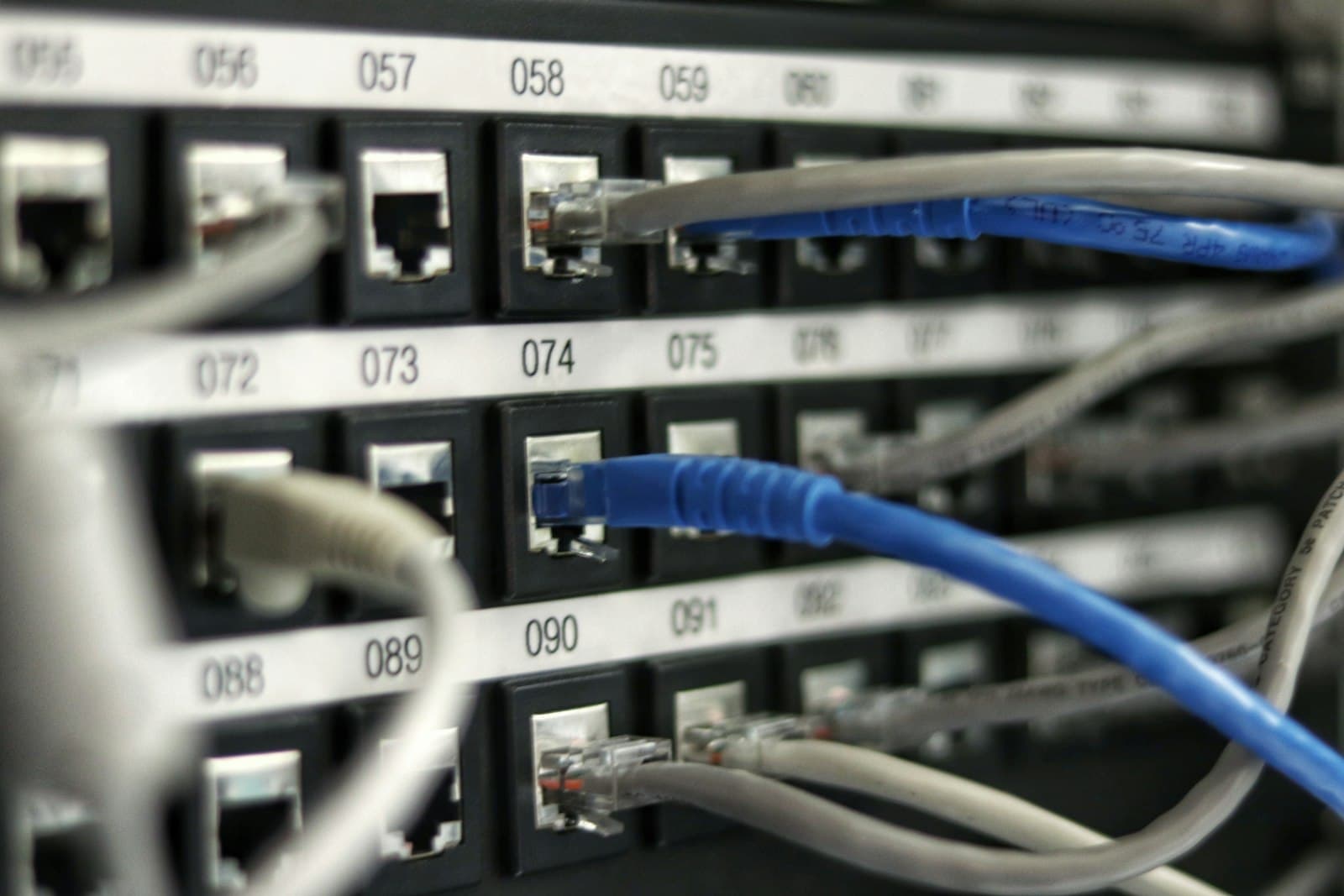
What "structured" actually means
Structured cabling is a designed system, not a pile of wires: horizontal runs from a patch panel to labelled outlets, tidy containment, a dedicated rack, and documentation that says which port is which. The opposite, a cable added every time a need appears, is how offices end up with mystery dead ports and switches balanced on shelves.
The payoff is boring in the best way: faults are findable in minutes, moves and expansions become plug-in jobs, and nobody blames the network every time something feels slow.
Cat6, Cat6A, or fibre?
Cat6 handles gigabit comfortably and remains a sound budget choice for small offices with short runs. Cat6A carries 10 gigabit over a full 90-metre run and supports high-power PoE better than Cat6, which is why we recommend it for new UAE fit-outs. The cable cost difference is small against a 15-year life, and modern Wi-Fi access points and cameras increasingly assume it.
Fibre belongs between floors, between buildings, and anywhere runs exceed copper's 90 metres, which is common across warehouses and labour accommodations. A typical site mixes both: a fibre backbone, copper to the desk.
PoE changes the math
Power over Ethernet means the cable that carries the data also powers the device on the end: access points, IP cameras, VoIP phones, access-control readers, sometimes even displays. That is why cabling and low-current systems should be designed together: every camera and reader you plan for later is another drop you want in the wall now, while the false ceiling is open.
What a proper installation includes
Insist on four things in any quote: a floor-plan drawing with outlet positions, labelling on both ends of every run, test results for every link from a proper cable tester rather than an assurance that it works, and as-built documentation handed over at the end. These four are what make the difference ten years later.
In the UAE specifically, plan the cabling alongside your fit-out approvals: pulling cable while the ceiling is open costs a fraction of doing it after handover.
The remote-management layer
Good cabling is also what makes remote network management work: with managed switches and access points sitting on a tidy physical layer, most faults can be diagnosed and fixed without a site visit, whether that means a firmware update, a configuration change or a port bounce. That is how a Ras Al Khaimah or Dubai office gets back to work without waiting for an engineer to drive over.