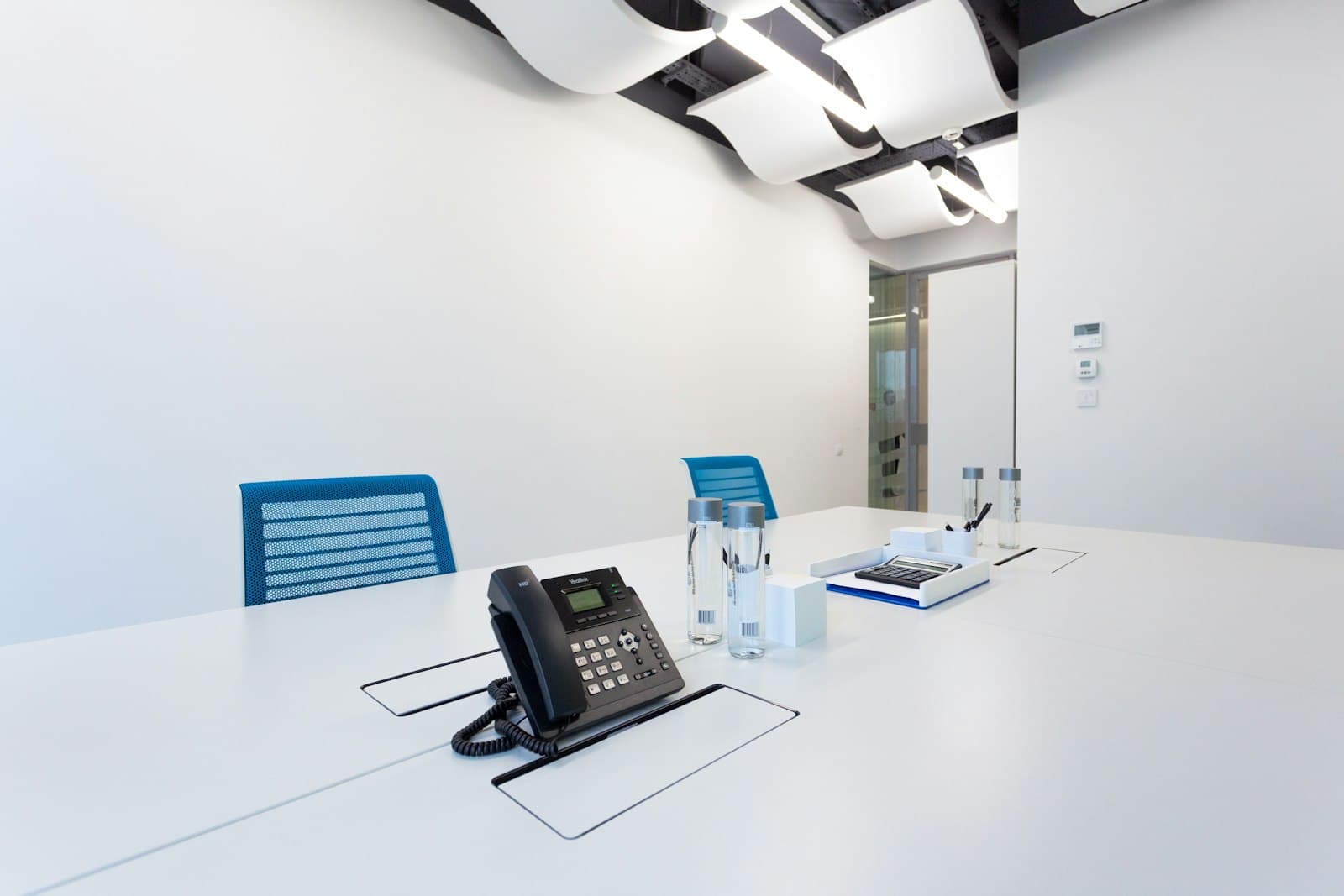
What business VoIP is, and what it isn't
VoIP simply means your calls travel over your network instead of dedicated copper lines, and the phone system itself becomes software, running on a small appliance in your office or in the cloud. 3CX, Yeastar and Grandstream are the platforms you will meet most in the UAE market.
What it isn't is a consumer calling app. A business system connects to the public phone network through a SIP trunk, so you keep real UAE numbers, call any phone normally, and stay within the telecom rules.
Why businesses switch
The reasons are practical rather than fashionable. Adding an employee becomes a change in software instead of a wiring job, a branch and a remote colleague join the same system, and a salesperson's mobile app rings with the office number. Features that used to belong to large enterprises now come built in: an IVR menu, call queues, recording, and a live board showing who is talking and how long callers have waited.
The cost picture usually improves as well: fewer lines, one system serving every branch, and no separate maintenance contract per site. How much you save depends on your own bills, which is why a serious provider starts by reading them instead of promising you a percentage.
Doing it properly in the UAE
A business system in the UAE runs on a SIP trunk that links it to the public phone network, the route that keeps your numbers official and carries voice on a business-grade circuit. We size the trunk, meaning how many simultaneous calls you need, port your existing numbers so they stay exactly as your customers know them, and coordinate the cutover so no call is lost on switching day.
A system in your office, or in the cloud?
Both are sound choices. An on-premise system, a small appliance in your rack, suits a business that wants a one-time hardware cost and full control, and it is common on a single stable site. A cloud system suits multi-branch and remote-heavy teams: nothing to host, and the system lives wherever your people are. Pricing models differ as well: 3CX, for example, charges by simultaneous calls rather than per user, which favours larger teams that do not all call at once.
What a proper deployment includes
VoIP quality is network quality. Before any phone arrives the network needs a readiness check: enough bandwidth, QoS so voice takes priority over downloads, and PoE ports if you choose desk phones. Then come the parts people forget. Call-flow design decides what a caller hears at eight in the evening and where an unanswered call goes. After that come recording and retention settings, training the team on transfers and queues, and a failover plan that sends calls to mobiles if the internet drops.
- 01Caller dials your UAE numberThe number stays yours: ported, not replaced.
- 02SIP trunk to the public networkThe route your calls take in and out.
- 03The system applies your call flowIVR menu, working hours, department routing, recording.
- 04Desk phones and mobile apps ringOffice and remote staff ring together on the same extension.
- 05Failover if nobody answersVoicemail, a mobile, or an out-of-hours message, never a dead line.
When switching will not help you
A shop run by one person on a single mobile number gains nothing from a phone system of any kind. And if your internet connection is genuinely unstable with no route to fixing it, start there, because VoIP inherits the health of the network it runs on. For everyone else: if you are paying for several lines, running branches, or losing sales calls you never see, the switch usually repays its cost sooner than you expect.