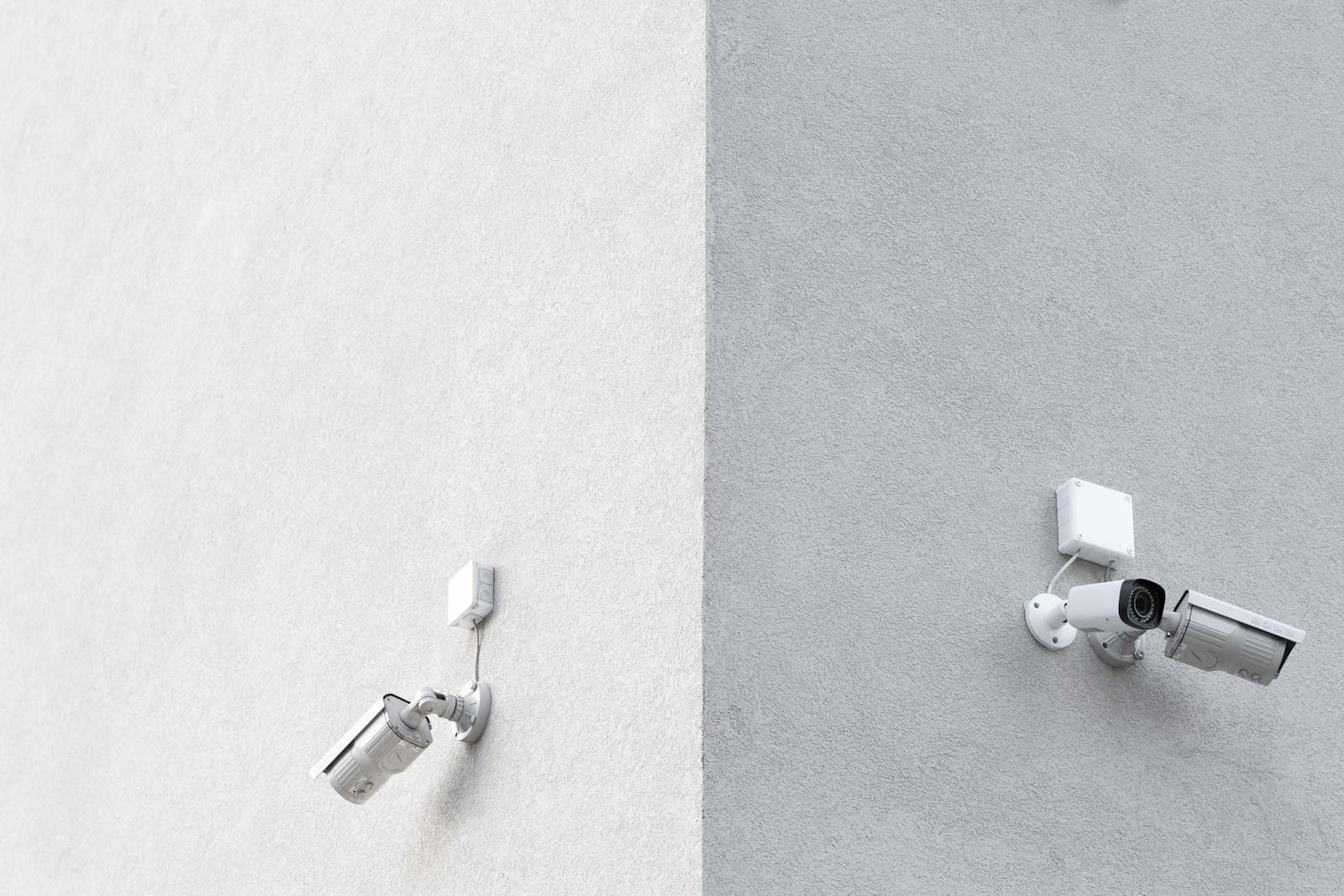
Start from the incidents, not the camera count
The right question is not how many cameras you need, but what the footage has to prove. A dispute at a till needs a face and a transaction in one frame, a warehouse needs goods-in and goods-out, an office needs the entrances, the server room and reception. Write down the incidents you would go back to, then place cameras to answer them, and the count follows.
IP or analog, and when resolution matters
Modern installations are IP cameras on the network: a clearer picture, one cable carrying power and data over PoE, and easier expansion when you add a camera. Analog HD still makes sense when you are reusing existing coax on a tight budget.
Resolution matters at identification points: entrances, tills and gates, where 4MP and above earns its price. General area coverage is usually better served by a 2MP camera that sees well in poor light than by a higher-resolution sensor that struggles after dark. In practice low-light performance and correct mounting settle more cases than megapixels.
Storage: the part everyone undersizes
Retention is a management decision before it is a technical one: how many days do you need to go back? Thirty days is a common baseline, and a free zone, a landlord or an insurer may set a longer minimum, so check your lease and your policy. Storage size then follows from camera count, resolution and recording mode, continuous or motion-triggered.
Record locally on an NVR, so recording continues even if the internet drops, and treat cloud as an extra layer for clips and offsite copies rather than the primary store.
Remote viewing, plate recognition and integration
Live viewing from a phone is standard now, but insist on a genuinely secured setup: a unique password per device, current firmware, and no camera exposed directly to the internet. ANPR number-plate recognition earns its price at a gate or a car park. If you already run access control or an alarm, choose a platform that integrates with it rather than a second, separate system.
Rules and privacy in the UAE
The UAE regulates CCTV, and the rules differ from emirate to emirate on where cameras belong, how long footage is kept, and the signage that announces them; some categories of business carry stricter ones. Ask what applies to your activity and your location before you buy, not after the install.
Aim the cameras with the privacy line in mind as well, covering public areas and work areas and leaving private ones alone.
Whoever you buy from, get the design on paper first: a camera schedule, a coverage map, a retention calculation, and a fixed price. If the quote is just a camera count and a total, keep looking.